Investing in tennis players
Last week I attended the first day of Wimbledon after receiving a pair of tickets through Fantium. I've written about it before, but for those who don't know, Fantium is a platform that enables retail investors to invest in tennis players and earn a percentage of their prize money in return. I've been a user for a couple of years now, and as part of the product I can request tickets to tournaments where the players I've invested in are competing.
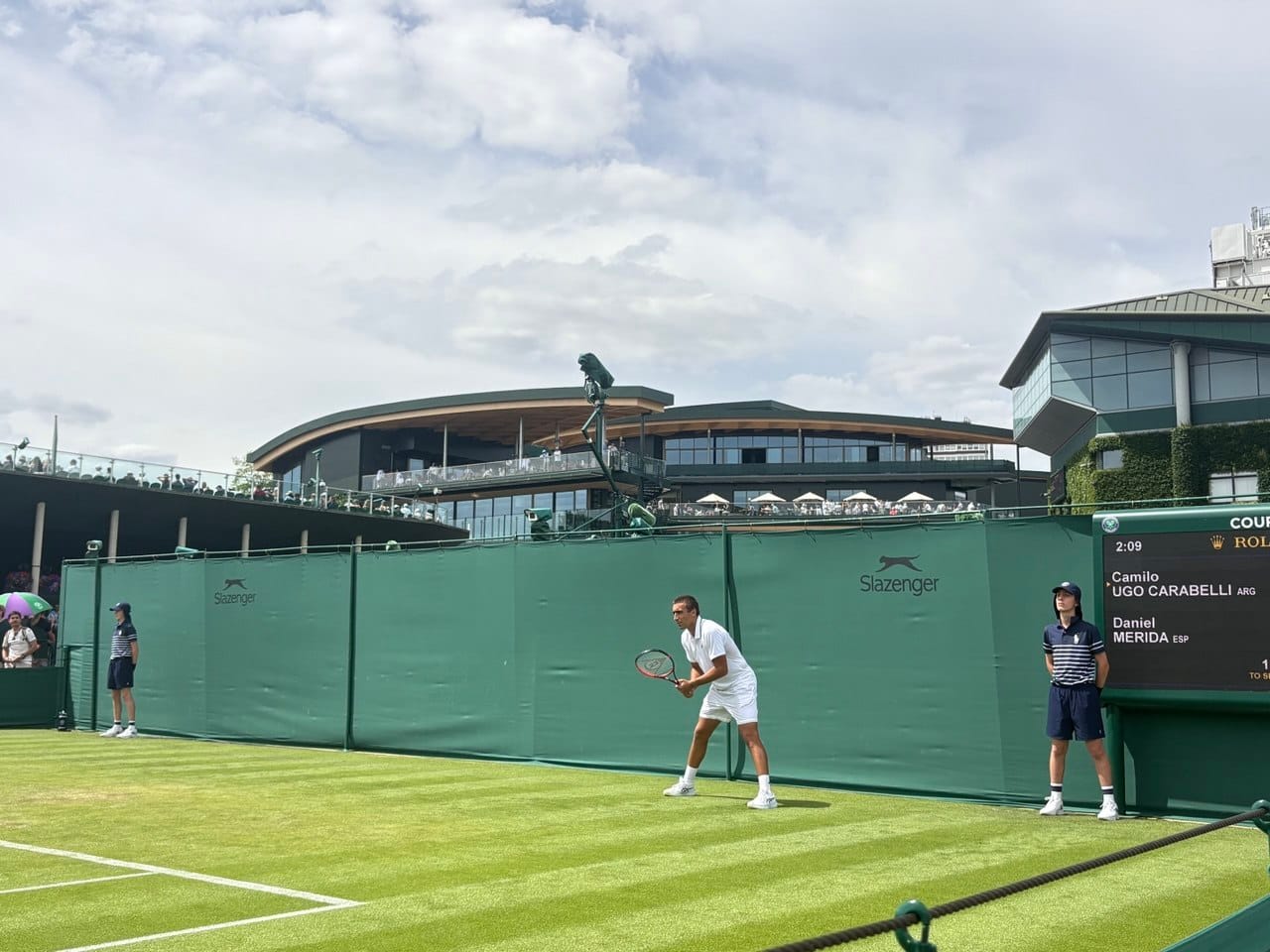
I currently have a portfolio of 5 players, and this year 3 of them qualified for Wimbledon, where I saw them all play their first round matches. Tristan Boyer and Darja Semenistaja both unfortunately lost their matches, but Daniel Merida managed to win his and progress to the second round.
It's cool to see players I invested in when they were more obscure climb the rankings and start to compete at the grand slams. It's also exciting when the players start generating financial returns.
The classic Fantium structure is that once a player finishes inside the top 150 at the end of a given year, investors earn for 6 straight years, including that year. I invested $849 in Daniel Merida, and if he finishes in the top 150 by year end, something he's on course to achieve as the current world number 80, I will earn 0.0446% of his gross prize money over 6 years.
Below you can see the prize money on offer at Wimbledon this year. At this tournament alone, Daniel will have generated 126,000 GBP × 0.000446 = 56.2 GBP, or roughly $74.6, in prize money for me.
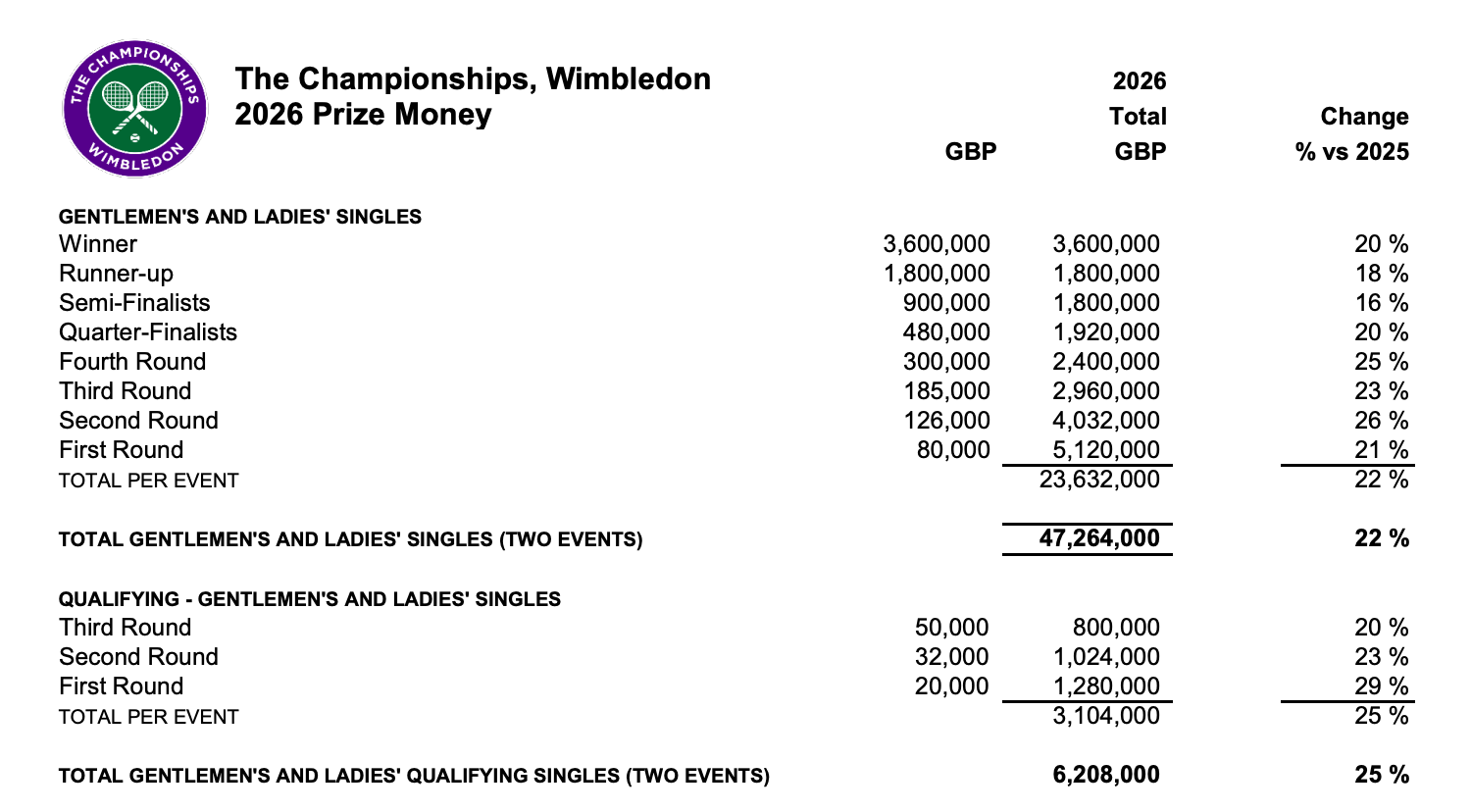
Over the past 10 years, prize money at the top tournaments has increased substantially. At the four grand slams, the Australian Open, French Open, Wimbledon and US Open, prize money has on average doubled. Tennis has become a bigger business, with tournaments generating more revenue, and players demanding that a larger portion of that revenue be distributed as prize money.
What's interesting is that the early rounds have seen a larger multiple increase in prize money than the later rounds. Let's look at Wimbledon as an example.
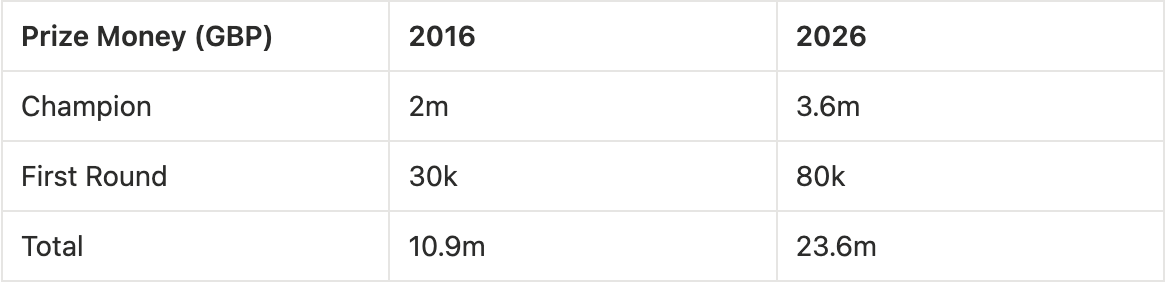
Comparing prize money for 2016 and 2026, the amount for the champion less than doubled, while a player who competes and loses in the first round now earns almost 3x what they did 10 years ago. The same trend applies to the other tournaments as well. This is one of the outcomes of a concerted push by the tennis community to make players' lives more economically viable, particularly for those outside the top rankings.
As an investor, this makes investing in tennis more interesting, because more players are earning more money. Of course the goal is to invest in a future grand slam champion, but investing in players who consistently compete at grand slams is enough to generate attractive financial returns.
One theme I continue to be excited by is products that make new assets, or assets that were previously difficult to access, available to the crowd. Crypto has been a democratizing force in that regard, providing the infrastructure for a lot of these products. Fantium is built entirely on crypto rails, but that's all abstracted away. Retail users, for the first time, simply have the ability to invest in a new asset, tennis players.