Open social graphs
The Farcaster team recently announced that they’re shifting focus away from building a standalone social app and toward a wallet with social features layered on top. Some were quick to interpret the move as a failure, a sign that decentralized social didn’t work, but I don't see it that way.
First, the Farcaster app didn't pivot entirely away from social but is focusing more on its built-in wallet which has seen stronger traction. Startups change direction all the time as they learn what is and isn’t working.
Second, the most valuable thing the Farcaster team built, in my eyes, was never the app itself but the open social graph underneath it.
A social graph is the underlying data that defines a social network: who you are, who you follow, who follows you, and how accounts interact with each other. Traditional social networks like X and Instagram keep their social graphs closed, meaning external developers can’t access them or build new products on top. Farcaster’s social graph is open. Anyone can build applications that read from and write to the same shared graph. The Farcaster team dogfooded their own social graph by building the first client on top, but today there are many others created by third-party developers.
One of those clients is Coinbase’s new Base app, which I signed up for a couple of days ago. When I created my Base account, I imported my Farcaster social graph and instantly my followers, the people I follow, and the posts I had created over the last few years were all there. There was no cold start. I could immediately engage with my existing social graph through a new interface.
I posted about how seamless the experience was for me from the Base app and then viewed that post through the Farcaster app.
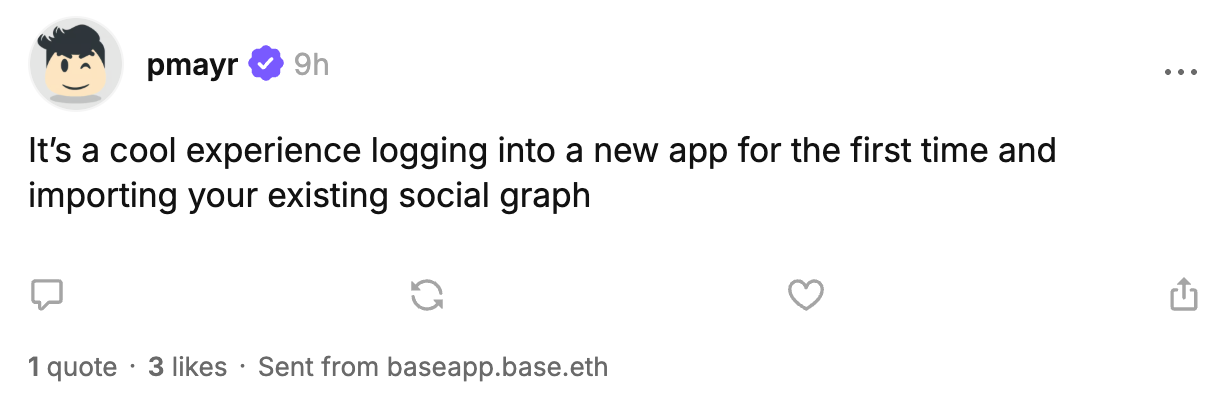
That’s the power of an open social graph: multiple interfaces that all build on the same underlying data.
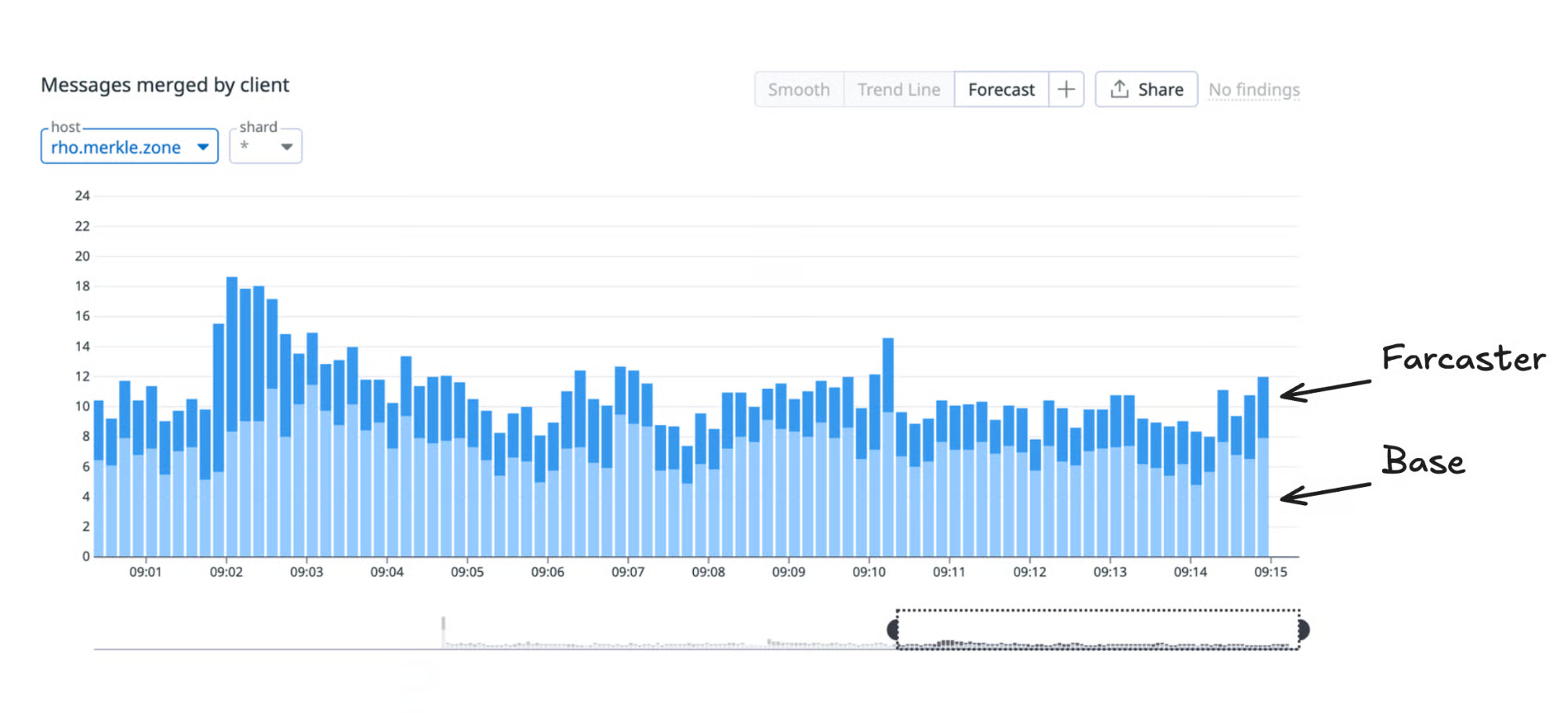
The chart above shows how the Base and the Farcaster apps compare in terms of messages sent on the Farcaster social graph.
An open social graph is a developer platform and the thing about open platforms is that they enable a lot of experimentation. Many teams, many clients, many ideas running at once. Some experiments will work, many won’t.
The Farcaster team’s own first attempt at a client on top of the graph didn’t break out the way they hoped, and they are responding by changing strategy.
And so while we may still be waiting for a breakout app, decentralized social has already delivered something incredibly valuable: an open social graph that anyone can build on.